Oil pulling may reduce some measures of plaque, but the human evidence does not show that it reverses gum disease or prevents cavities. Small trials have reported benefits over a few days or weeks. Other trials found that rinsing with water also helped, or that a standard antiseptic rinse controlled plaque better. The useful question is narrower than whether oil pulling works: what changed, compared with what, and for how long?
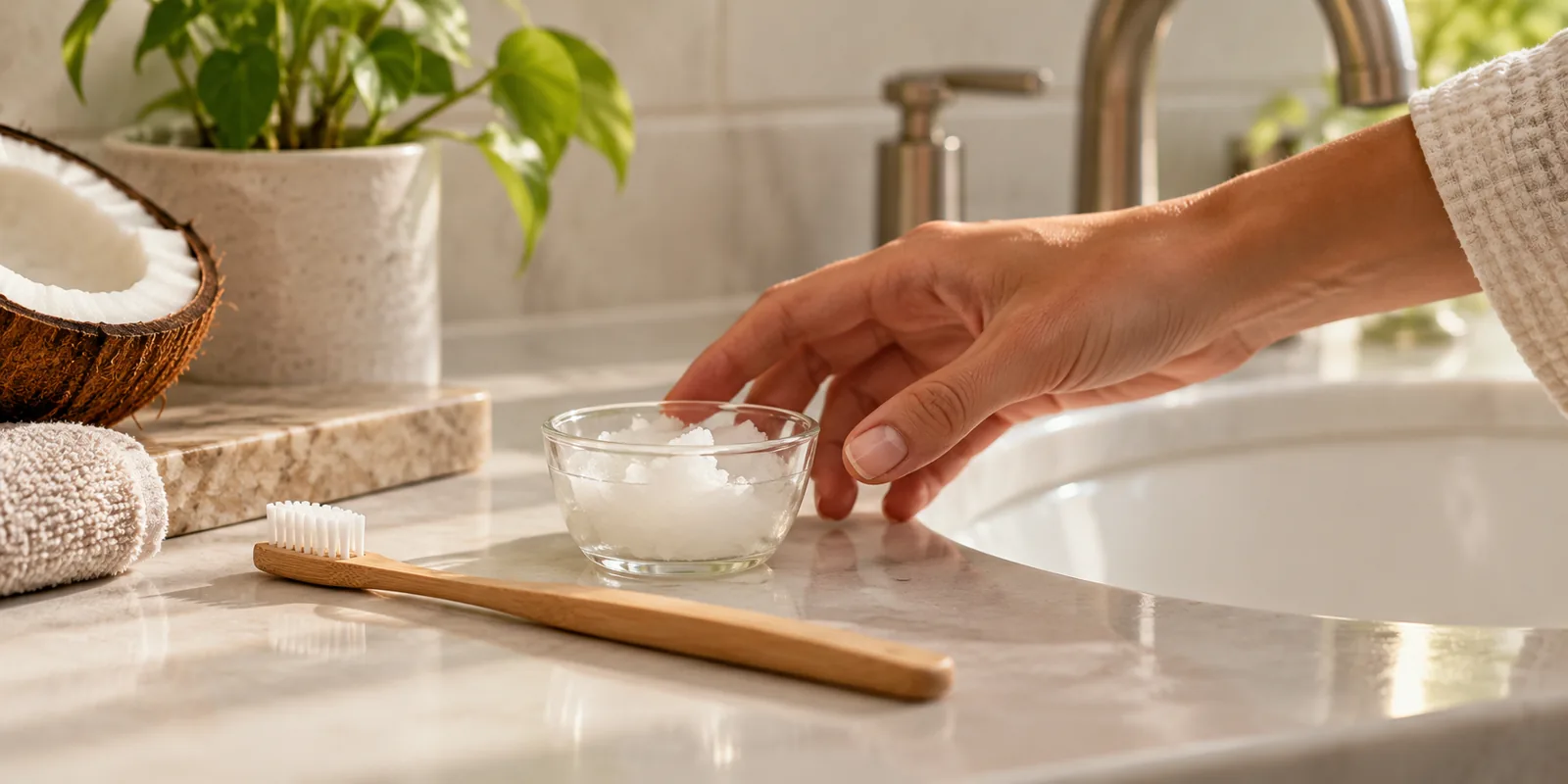
Oil pulling means moving edible oil around the mouth and between the teeth, then spitting it out. Coconut and sesame oil appear most often in research. The practice can appeal to someone who wants a simple, low-cost addition to oral care. It takes time, though, and a pleasant feeling after rinsing is different from showing that gums or teeth are healthier months later.
What the studies actually measure
Dental researchers often score plaque, the soft film that builds on teeth, and gingival inflammation, the redness or swelling of the gums. They may also count spots that bleed when gently probed. These scores are useful early signals. A lower plaque score after four days does not prove fewer cavities over years. Neither does it prove that a person with deep periodontal pockets has healed.
The comparison group matters as much as the oil. When researchers compare an oil with another oil, both groups may improve because both spend extra time swishing and paying attention to their mouths. A water-rinse group tests whether the oil adds something beyond that action. A chlorhexidine group tests whether it performs like an established short-term antiseptic rinse, although that product can stain teeth and is not a substitute for everyday brushing either. Blinding is difficult when an oil feels and tastes different from water.
A four-day coconut oil experiment
The Sezgin coconut-oil crossover trial (https://pubmed.ncbi.nlm.nih.gov/31780023/) enrolled 29 volunteers. After a professional cleaning, each person used coconut oil or a chlorhexidine rinse during a four-day period when plaque was allowed to grow back. Participants then had a 14-day break and switched to the other rinse. Because the same person tried both approaches, ordinary differences between people were less likely to distort the comparison. The examiner was masked, although participants could probably tell which liquid they used.
At the end of the short periods, average plaque scores were 1.67 after oil and 1.61 after chlorhexidine. Gum and bleeding scores were similar by the statistical tests reported. Tooth staining was lower with oil. The researchers described similar plaque inhibition, but a study this small cannot establish that the two approaches are equivalent. A nonsignificant difference can mean the effect is close, or that there were too few people to detect a meaningful gap.
The design also limits the practical answer. Four days of plaque regrowth after a cleaning is a useful laboratory-like challenge. It is unlike living with gingivitis for months while eating, brushing, flossing, and perhaps missing an area around a crowded tooth. The trial did not test cavity prevention or long-term gum treatment. It does suggest that coconut oil can affect short-term plaque measures under controlled conditions.
The larger 2026 comparison gave a different answer
The Sahin and Aydin edible-oils trial (https://pubmed.ncbi.nlm.nih.gov/42450995/) assigned 100 healthy dental students to five groups: chlorhexidine, coconut oil, black cumin seed oil, terebinth oil, or water. Everyone first had professional plaque removal. For four days they avoided mechanical cleaning and used the assigned liquid twice daily. Researchers measured plaque regrowth, gum inflammation, and tooth color.
Chlorhexidine held plaque back better than every oil and water in that experiment. The oils caused less discoloration than chlorhexidine. The result does not mean oil has no effect. It does mean that the 2019 coconut-oil finding should not be treated as settled proof that oil and chlorhexidine work equally well. Different participants, products, procedures, and measurements can shift a short-term result. The 2026 study's 100 students were still a narrow group, and four days cannot tell us whether a home routine protects gums over a season.
The investigators concluded that an oil rinse might be an addition to usual plaque control, rather than its replacement. That is also the practical limit supported by their design. Students were asked to stop brushing for the experiment so the researchers could see plaque regrow. Readers should not copy that part of the protocol at home.
What happens when the control is water?
The Innsbruck sesame-oil trial (https://pubmed.ncbi.nlm.nih.gov/39786483/) randomized 40 people without advanced periodontal disease to swish sesame oil or distilled water for 15 minutes each morning for eight weeks. Both groups continued in a setting where examiners could assess plaque and gum bleeding. The researchers reported a larger reduction in full-mouth plaque score with oil than with water, about 19% versus 10% by the median measure they used. They also said study bias could not be ruled out.
Bleeding scores improved in both groups, with no clear difference between oil and water. There was no clear shift in the microbiology of sampled plaque. The split between plaque and bleeding is important: less visible film did not produce a demonstrated extra improvement in gum bleeding in that trial. The participants could identify their rinse, and the sample was small. The authors called for better trials before firm recommendations.
A related report of a sesame-versus-water study (https://pubmed.ncbi.nlm.nih.gov/40724659/) describes reductions in plaque and bleeding within both groups after eight weeks, but no statistically significant between-group difference for those measures. These papers may describe overlapping work or different analyses, so an editor should check the full methods and recruitment dates before treating them as independent confirmations. The common point is that a before-and-after improvement alone is weak evidence that the oil was responsible.
Coconut versus sesame does not answer the main question
The Bansal coconut-and-sesame trial (https://pubmed.ncbi.nlm.nih.gov/38854769/) randomly split 40 people with gingivitis between the two oils for 30 days alongside their usual oral hygiene. Plaque and gingival scores fell in both groups. That is a positive observation, but there was no water-only or usual-care-only arm. The study cannot separate an oil effect from extra rinsing, improved brushing, or the natural variation in gum scores. It also does not establish that either oil is superior in a way that matters to patients.
One abstract number for the sesame bacterial count appears internally inconsistent, rising from 6.8 to 34.6 thousand colonies while the text calls it a decline. That is a reason to avoid repeating the bacterial conclusion without checking the full paper and any correction. Plaque and gingival scores are the more relevant outcomes for this article. A single misreported number does not erase the study, but it reduces confidence in that particular claim.
What about a prepared oil-pulling rinse?
A 2026 trial of a formulated oil-pulling rinse (https://pubmed.ncbi.nlm.nih.gov/42657049/) randomized 63 adults for 15 days against an alcohol-based anti-gingivitis mouthwash and placebo. Some bacterial and plaque measures improved in the test group. The difference in gram-positive bacteria between groups was not statistically clear; a gram-negative measure did differ. A prepared rinse is not the same intervention as a spoonful of plain coconut oil. Its ingredients and use instructions need to be examined before applying the result to kitchen oil.
This trial's short duration is also a reminder that a lower bacterial count is an intermediate measurement. Mouths contain many microbes, and a simple count does not show that someone avoided a cavity, kept a tooth, or needed less periodontal treatment. The most useful follow-up would measure lasting clinical outcomes while participants keep a normal brushing routine.
Can oil pulling whiten teeth or treat periodontitis?
None of these trials demonstrates that oil pulling rebuilds bone around teeth, removes hardened tartar, or cures periodontitis. The American Dental Association's oil-pulling guidance (https://www.mouthhealthy.org/all-topics-a-z/oil-pulling) says reliable evidence does not show cavity prevention, whitening, or general oral-health improvement. Its position is broader and more cautious than some small trial authors' conclusions. The ADA's whitening review (https://www.ada.org/resources/ada-library/oral-health-topics/whitening) also notes that oil pulling has not shown documented tooth whitening.
Gums that bleed repeatedly, recede, hurt, or remain swollen deserve a dental assessment. A professional can look for tartar and measure pocket depth, which an oil rinse cannot do. Teeth that feel loose or an abscess that causes swelling need prompt care. An optional home ritual should never delay those checks.
The site's older article about healthy teeth and gums is an archive piece, not evidence that oil pulling treats disease. Its historical claims should be judged separately from these trials.
A sensible way to think about the practice
Someone who enjoys oil pulling can view it as an optional extra after brushing and cleaning between teeth. Spit the oil into a bin rather than swallowing it or pouring a large amount into a drain. Do not force a long session if it causes jaw strain or nausea. Young children and anyone at risk of choking or aspirating liquid should avoid a practice that requires prolonged swishing. Rare reports of oily material entering the lungs are another reason not to inhale or gargle oil.
The strongest supported claim today is modest: several short human experiments suggest oil pulling can change plaque scores, but the amount and clinical importance remain uncertain. The best water-controlled evidence is mixed, and the larger short-term trial found chlorhexidine stronger for plaque. There is no solid evidence of cavity prevention or reversal of advanced gum disease. If an oil ritual makes oral care more pleasant, that personal benefit is real to the person doing it, but it should not be sold as a proven treatment.