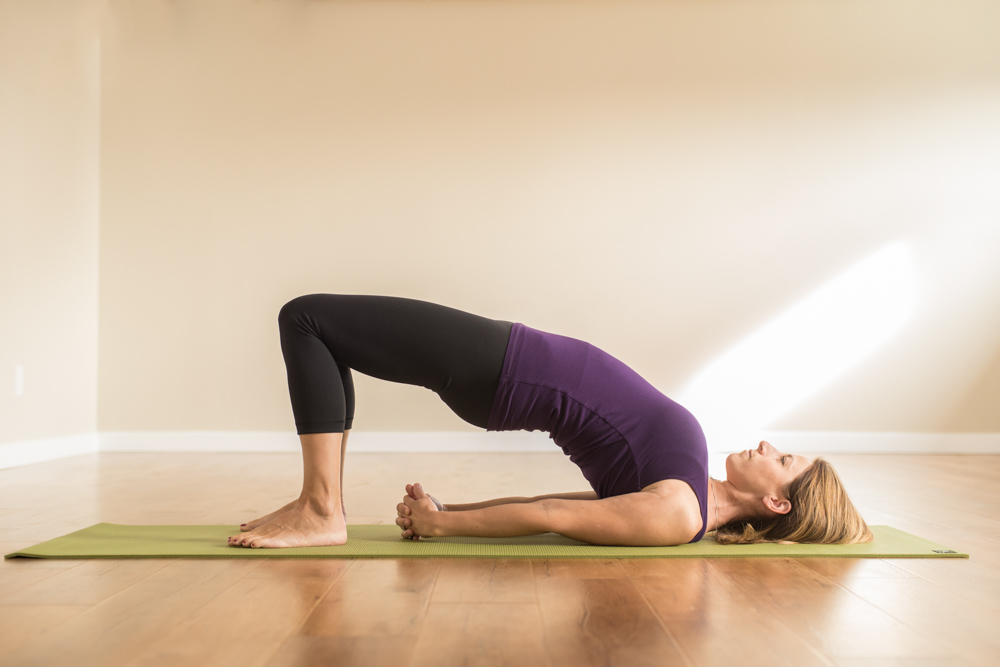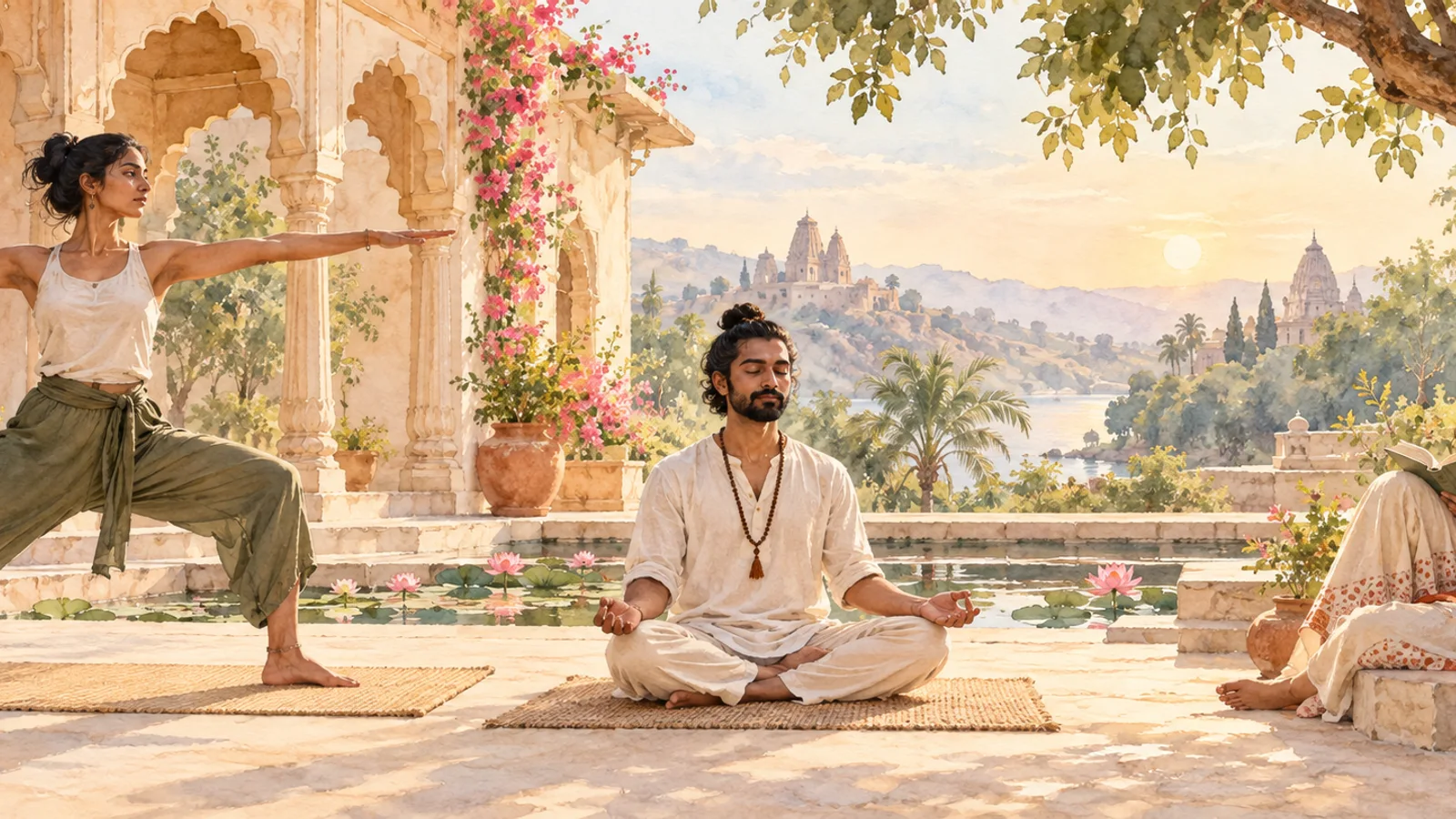
The classical techniques of Yoga date back more than 5,000 years. In ancient times, the desire for greater personal freedom, health and long life, and heightened self-understanding gave birth to this system of physical and mental exercise which has since spread throughout the world.The word Yoga means “to join or yoke together,” and it brings the body and mind together into one harmonious experience. The whole system of Yoga is built on three main structures: exercise, breathing, and meditation. The exercises of Yoga are designed to put pressure on the glandular systems of the body, thereby increasing its efficiency and total health.
The body is looked upon as the primary instrument that enables us to work and evolve in the world, and so a Yoga student treats it with great care and respect. Breathing techniques are based on the concept that breath is the source of life in the body. The Yoga student gently increases breath control to improve the health and function of both body and mind. These two systems of exercise and breathing then prepare the body and mind for meditation, and the student finds an easy approach to a quiet mind that allows silence and healing from everyday stress. Regular daily practice of all three parts of this structure of Yoga produce a clear, bright mind and a strong, capable body.
Seven types and paths of yoga
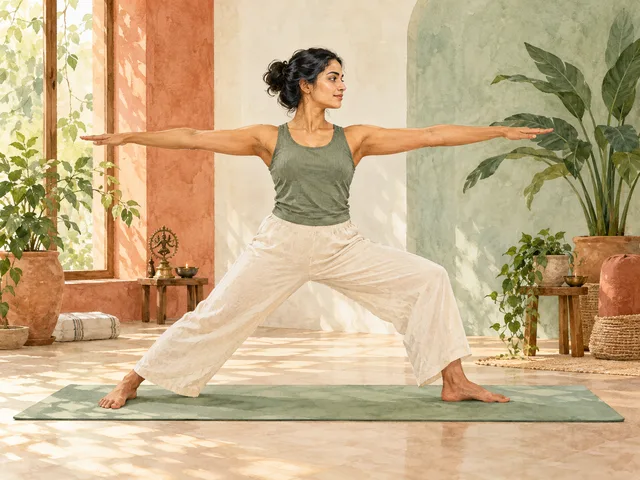
Hatha yoga
Hatha yoga centers on physical postures and breathing, often with a pause for relaxation or meditation. Class pace varies widely, so a beginner should check whether a session is gentle, vigorous, or adapted.
Raja yoga
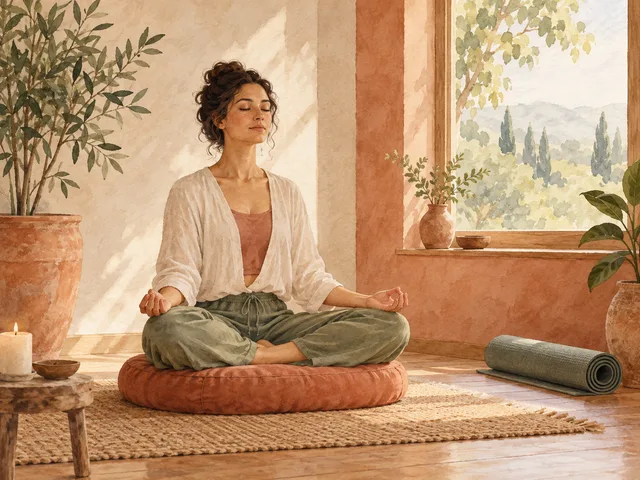
Raja yoga is a path of disciplined attention associated with classical yoga and Patanjali’s eight limbs. Its practices include ethical conduct, posture, breath, concentration, and meditation rather than exercise alone.

Jnana yoga
Jnana yoga emphasizes inquiry and self-knowledge. Practitioners study philosophical teachings and examine assumptions about the self and experience. It is a reflective path, not a particular sequence of poses.
Bhakti yoga
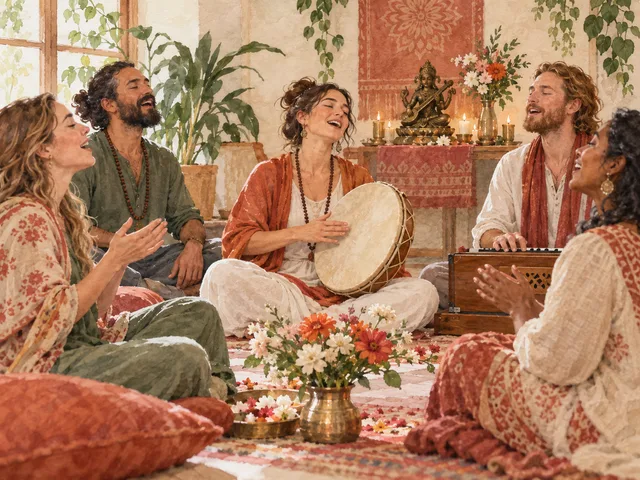
Bhakti yoga is the path of devotion. Singing, prayer, ritual, or remembrance may express a relationship with the divine. Its form depends on a person’s tradition and beliefs, not on flexibility.

Karma yoga
Karma yoga approaches ordinary action as service. The emphasis is on acting responsibly without clinging to praise or reward. Community work and daily duties can become part of the practice.
Tantra yoga
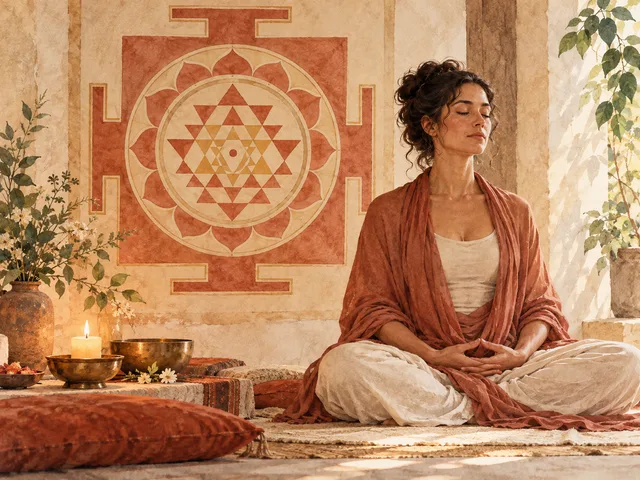
Tantra describes varied traditions that use ritual, mantra, visualization, and attention to embodied experience. It cannot be reduced to sexuality; methods and meanings differ across Hindu and Buddhist lineages.

Kashmir Shaivism
Kashmir Shaivism is a nondual Shaiva philosophical tradition, not a modern studio class style. Its contemplative practices explore awareness and the relationship between individual experience and a wider reality.
These names do not all describe the same kind of thing. Hatha commonly labels a posture-based practice; Kashmir Shaivism names a philosophical and religious tradition. If you want a movement class, ask about its pace, accessibility, and teaching approach. If you want meditation or study, look for a teacher who can explain the lineage and what participation involves.
Historical context: The original essay below is preserved. Its claim that Indus seals prove a 5,000-year yoga history is disputed; their figures cannot be interpreted with certainty. Read the scholarly discussion.
History of Yoga
No one knows exactly when Yoga began, but it certainly predates written history. Stone carvings depicting figures in Yoga positions have been found in archeological sites in the Indus Valley dating back 5,000 years or more. There is a common misconception that Yoga is rooted in Hinduism; on the contrary, Hinduism’s religious structures evolved much later and incorporated some of the practices of Yoga. (Other religions throughout the world have also incorporated practices and ideas related to Yoga.)
The tradition of Yoga has always been passed on individually from teacher to student through oral teaching and practical demonstration. The formal techniques that are now known as Yoga are, therefore, based on the collective experiences of many individuals over many thousands of years. The particular manner in which the techniques are taught and practiced today depends on the approach passed down in the line of teachers supporting the individual practitioner.
One of the earliest texts having to do with Yoga was compiled by a scholar named Patanjali, who set down the most prevalent Yoga theories and practices of his time in a book he called Yoga Sutras (“Yoga Aphorisms”) as early as the 1st or 2nd century B.C. or as late as the 5th century A.D. (exact dates are unknown). The system that he wrote about is known as “Ashtanga Yoga,” or the eight limbs of Yoga, and this is what is generally referred to today as Classical Yoga. Most current adherents practice some variation of Patanjali’s system.
The eight steps of Classical Yoga are 1) yama, meaning “restraint” — refraining from violence, lying, stealing, casual sex, and hoarding; 2) niyama, meaning “observance” — purity, contentment, tolerance, study, and remembrance; 3) asana, physical exercises; 4) pranayama, breathing techniques; 5) pratyahara, preparation for meditation, described as “withdrawal of the mind from the senses”; 6) dharana, concentration, being able to hold the mind on one object for a specified time; 7) dhyana, meditation, the ability to focus on one thing (or nothing) indefinitely; 8) samadhi, absorption, or realization of the essential nature of the self. Modern Western Yoga classes generally focus on the 3rd, 4th, and 5th steps.
Yoga probably arrived in the United States in the late 1800s, but it did not become widely known until the 1960s, as part of the youth culture’s growing interest in anything Eastern. As more became known about the beneficial effects of Yoga, it gained acceptance and respect as a valuable method for helping in the management of stress and improving health and well-being. Many physicians now recommend Yoga practice to patients at risk for heart disease, as well as those with back pain,arthritis, depression, and other chronic conditions.
Yoga and Religion
Yoga is not a religion. It has no creed or fixed set of beliefs, nor is there a prescribed godlike figure to be worshipped in a particular manner. Religions for the most part seem to be based upon the belief in and worship of things (God or godlike figures) that exist outside oneself. The core of Yoga’s philosophy is that everything is supplied from within the individual. Thus, there is no dependence on an external figure, either in the sense of a person or god figure, or a religious organization.
The common belief that Yoga derives from Hinduism is a misconception. Yoga actually predates Hinduism by many centuries. Ancient seals unearthed in the Indus Valley provide clear evidence of widespread Yoga practice earlier than 3,000 B.C.E. The techniques of Yoga have been adopted by Hinduism as well as by other world religions. Yoga is a system of techniques that can be used for a number of goals, from simply managing stress better, learning to relax, and increasing limberness all the way to becoming more self-aware and acquiring the deepest knowledge of one’s own self.
The practice of Yoga will not interfere with any religion. Many American Yoga Association students who have practiced Yoga intensively for many years continue to follow the religious traditions they have grown up in or adopted without conflict
Current safety guidance: The original advice below rules out yoga for children and during pregnancy. Those blanket restrictions are outdated. Age-appropriate yoga may benefit children, and modified yoga is generally safe for many pregnant people after individual medical advice. Read current NCCIH guidance.
Who Can Practice Yoga?
Yoga is suitable for most adults of any age or physical condition. Because of the nonstrenuous nature of our approach to exercise, even those with physical limitations can find a beneficial routine of Yoga.
Yoga exercises for women during menstruation, for pregnant women, or for nursing mothers are not recommended. Regular practice of breathing and meditation, however, is encouraged.
Yoga and Children
Yoga exercises are not recommended for children under 16 because their bodies’ nervous and glandular systems are still growing, and the effect of Yoga exercises on these systems may interfere with natural growth. Two of great teachers, Rama and Lakshmanjoo, gave advice of the dangers that Yoga asans may pose for young children. Children may safely practice meditation and simple breathing exercises as long as the breath is never held. These techniques can greatly help children learn to relax, concentrate, and reduce impulsiveness. Children trained in these techniques are better able to manage emotional upsets and cope with stressful events.
There is no doubt that Yoga postures (asans) and breathing techniques affect the physical body. People these days commonly accept the fact that such therapies as acupressure, neuromuscular massage, and reflexology can have systemic effects due to pressure applied to certain areas of the body. The physical basis for the effects of Yoga asans may be related. The asans and breathing techniques provide a deep massage and strong compression of the parts of the body where endocrine glands are located. Many Yoga stretches seem to target the nerves in the legs, arms, neck, and spine.
In sum, our position is that growth is in large measure controlled by the glandular system. It is a vastly complicated process, and the powerful physical and mental effects of Yoga asans may interfere with natural growth.
How to Get Started
The best way to get started in Yoga is to either find a qualified teacher or buy a good book or tape. If you’re not sure where to start looking, try adult education programs, massage and dance studios, and look for posters or listings in local health food stores or community weekly papers.