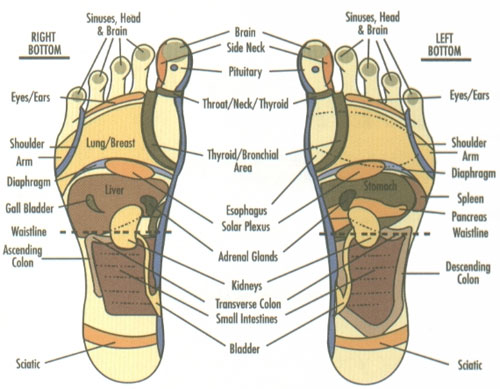
Reflexology applies pressure to areas of the feet or hands, often using a map that assigns each area to an internal organ. Some people enjoy it as a relaxing, hands-on practice. The key evidence question is whether it improves measurable symptoms, and whether any benefit is specific to the proposed organ map rather than touch, rest, or attention.
What have trials compared?
A randomized study of 183 women after surgery for early breast cancer compared usual self-initiated support, support plus reflexology, and support plus scalp massage. Using a massage comparison helped account for time and physical contact (early breast-cancer reflexology trial). The study was about psychological quality of life; it did not test whether foot zones diagnose or treat tumors.
A smaller trial in 60 people receiving treatment for colorectal cancer compared classical foot massage, reflexology, and standard care. Both massage approaches were associated with improvements in some symptoms; reflexology was associated with lower reported pain and fatigue in the study (foot massage and reflexology trial). The groups were small, outcomes were largely self-reported, and people knew which treatment they received.
In another randomized study, 88 people receiving palliative cancer care had six weekly sessions of either reflexology or relaxation. Both are active supportive approaches, and the reported changes do not establish that pressure on a particular foot spot affects a particular organ (reflexology versus relaxation trial).
Trying it thoughtfully
Reflexology may be a reasonable comfort practice if it feels good and is provided gently. Tell the practitioner about painful feet, wounds, fragile skin, neuropathy, or circulation problems, and avoid pressure that hurts. Do not use a reflexology chart to diagnose a symptom or postpone evaluation of a new problem. For another non-drug way to work with physical stress signals, see our biofeedback introduction.