Humanin is a short peptide studied for its role in helping cells respond to stress. Researchers have found protective effects in laboratory systems and intriguing links between naturally occurring humanin and aging. These are reasons to investigate it carefully. They are not evidence that a humanin injection prevents dementia, treats diabetes, or adds years to a person's life.
Its name is also easy to misunderstand. Humanin is a molecule, while HNG and HNG-F6A are modified relatives used in some experiments. A paper discussing the humanin family may administer one of those relatives rather than the original peptide. Identifying exactly what was tested is the first step toward understanding the benefits people search for.
How humanin entered the research literature
The original Hashimoto discovery paper from 2001 (https://pubmed.ncbi.nlm.nih.gov/11371646/) described a search for factors that could protect cultured neuronal cells against selected Alzheimer-related insults. A short peptide called humanin emerged from that work. The cells survived certain experimental stresses more effectively under the tested conditions. Nobody with Alzheimer's disease received a proven treatment in that experiment.
That distinction does not diminish the discovery. Cell experiments allow researchers to isolate a question that would be difficult to examine inside a living brain. They can add a suspected harmful factor, compare conditions, and measure whether cells survive. What they cannot reproduce is the full experience of a person living with a complex disease over years.
The research began with protection against particular challenges. It should not be retold as a universal repair system that rescues every damaged cell. A molecule can have a real, specific effect without supporting every health claim attached to its name. Reading the original question helps prevent that gradual expansion of meaning.
What does cell protection mean?
Cells can die through organized processes as well as through sudden injury. Apoptosis is a programmed form of cell death. It has useful roles in normal development and in removing cells that should not remain. Protecting a cell from apoptosis can therefore have different consequences depending on which cell it is and why the signal arose.
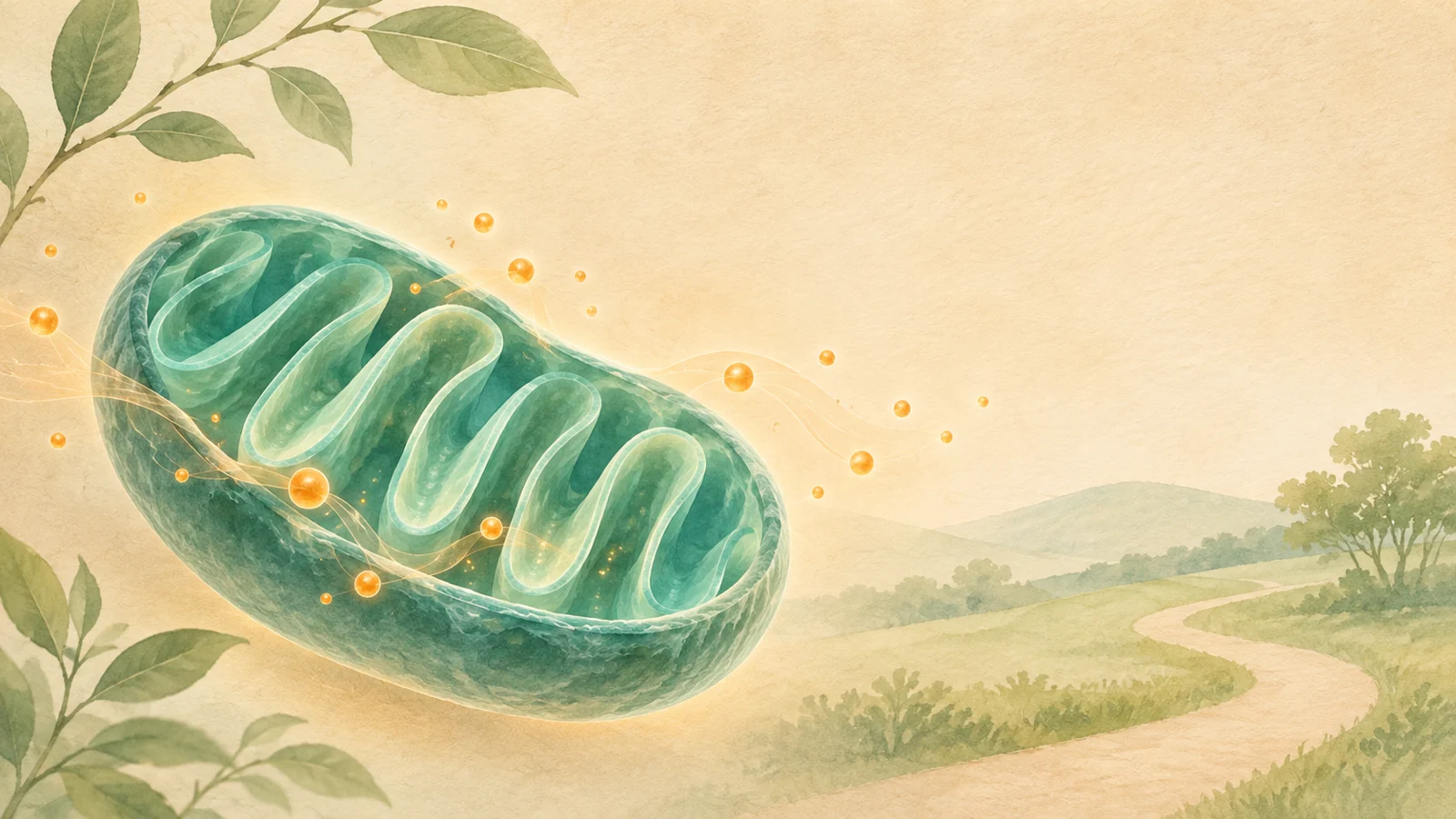
A mechanistic study by Guo and colleagues (https://pubmed.ncbi.nlm.nih.gov/12732850/) found that humanin interacted with BAX, a protein involved in the mitochondrial cell-death pathway. The work helped explain a route through which humanin could alter cell survival. It was a molecular investigation, not a demonstration that blocking cell death everywhere would improve health.
Picture a smoke alarm connected to several safety systems. Preventing an unnecessary shutdown might protect useful work, but disabling every response without understanding the problem would be risky. Humanin is not literally an alarm switch. The comparison simply explains why a protective mechanism needs to be studied in the right setting instead of being labeled automatically beneficial.
The centenarian connection
A 2020 study on lifespan and healthspan (https://pubmed.ncbi.nlm.nih.gov/32575074/) combined work in several species with a small human comparison. Eighteen offspring of centenarians had higher circulating humanin than 19 age-matched controls. That is an association between a biological measurement and a family background linked with longevity. It is not an experiment in which humanin made people live longer.
Families share many influences, including genes and aspects of their environment. A blood measurement could reflect a protective process, a response to another process, or a combination of factors. Giving a molecule to someone is a separate question. The study's animal and worm findings must also remain distinct from its observations in people.
Healthspan means time lived in good health or with better function; lifespan means length of life. The terms should not be swapped. An improvement in a metabolic marker is narrower still. A study can offer an interesting finding at one level while leaving the larger claim unanswered. The specific measurement matters more than the broad anti-aging label.
Why the modified variants matter
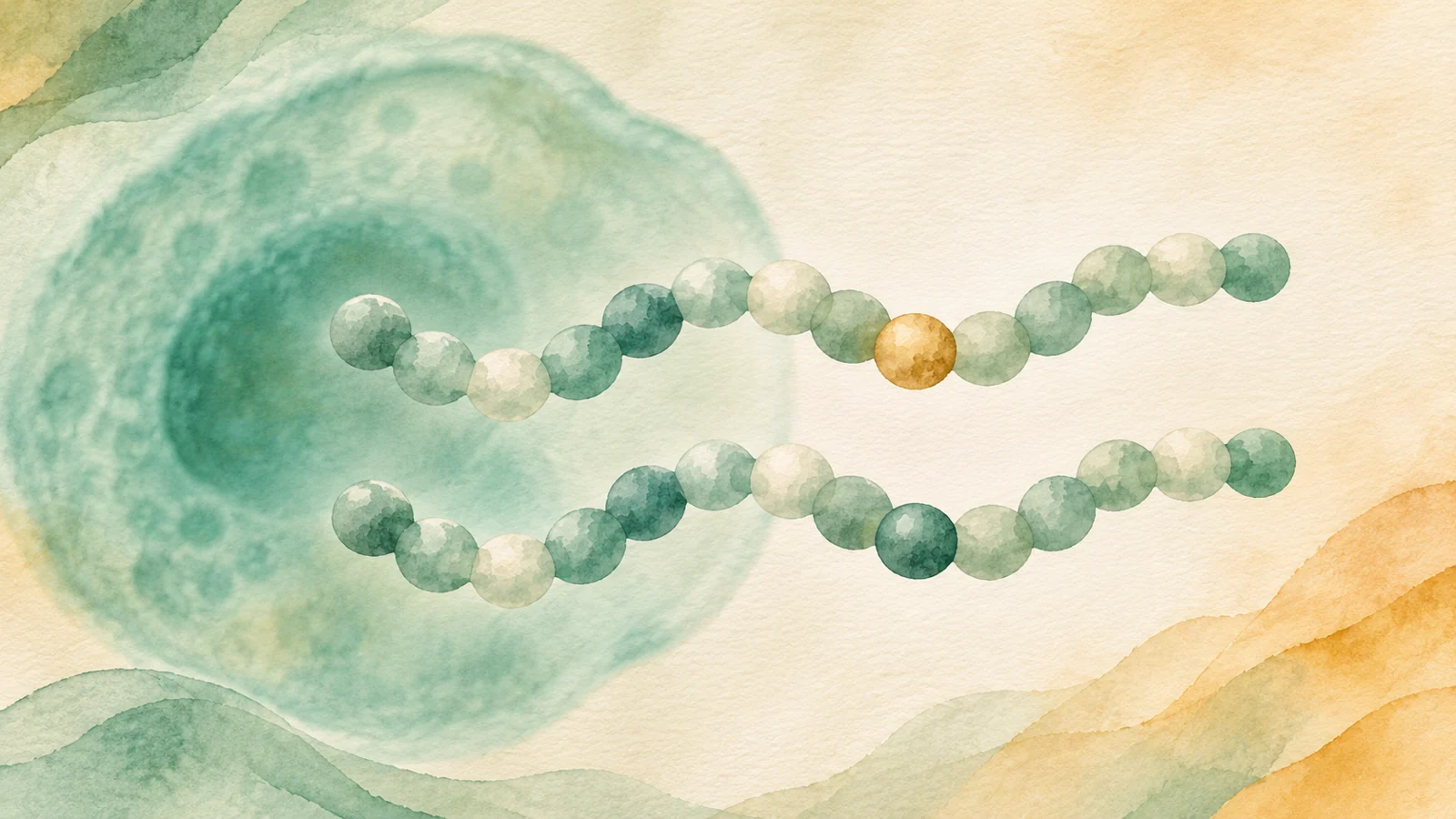
Native humanin is commonly described as a 24-amino-acid peptide. HNG, also called S14G-humanin, has a substitution at position 14. F6A-humanin has a different substitution at position 6, and HNG-F6A combines changes. These labels identify changes in the chain, not simply different strengths of the same finished treatment.
A small alteration can affect binding, activity, or how long a peptide remains detectable. The proper comparison is therefore the exact molecule in the exact experiment. If a paper used HNG-F6A in rodents, its results should not appear beneath a humanin product as though that product had been clinically tested. A family resemblance cannot establish equivalence.
Our overview of peptides explains the broad category. The useful question for this article is more specific: which humanin form, given to which organism, produced which result? That question is especially valuable when a sales page groups several different papers under one benefits list.
What the metabolism experiments can tell us
The 2009 study of humanin and insulin action (https://pubmed.ncbi.nlm.nih.gov/19623253/) used rodent experiments to examine how humanin-related signals influenced glucose handling. It included modified peptides and carefully controlled metabolic measurements. Such work can identify a plausible connection between cellular stress signaling and the body's response to insulin.
It does not establish that a person with diabetes should take humanin. A controlled glucose experiment over a short interval differs from long-term diabetes care, where complications, day-to-day safety, and treatment interactions matter. A change in how a rat handles an infused sugar load cannot be read as a known effect on a person's future health.
The meaningful next question is whether a clearly defined compound can improve an important outcome in people while remaining acceptably safe. That requires a clinical program. It cannot be answered by combining separate laboratory findings until they look like a completed treatment trial.
Autophagy is another research route
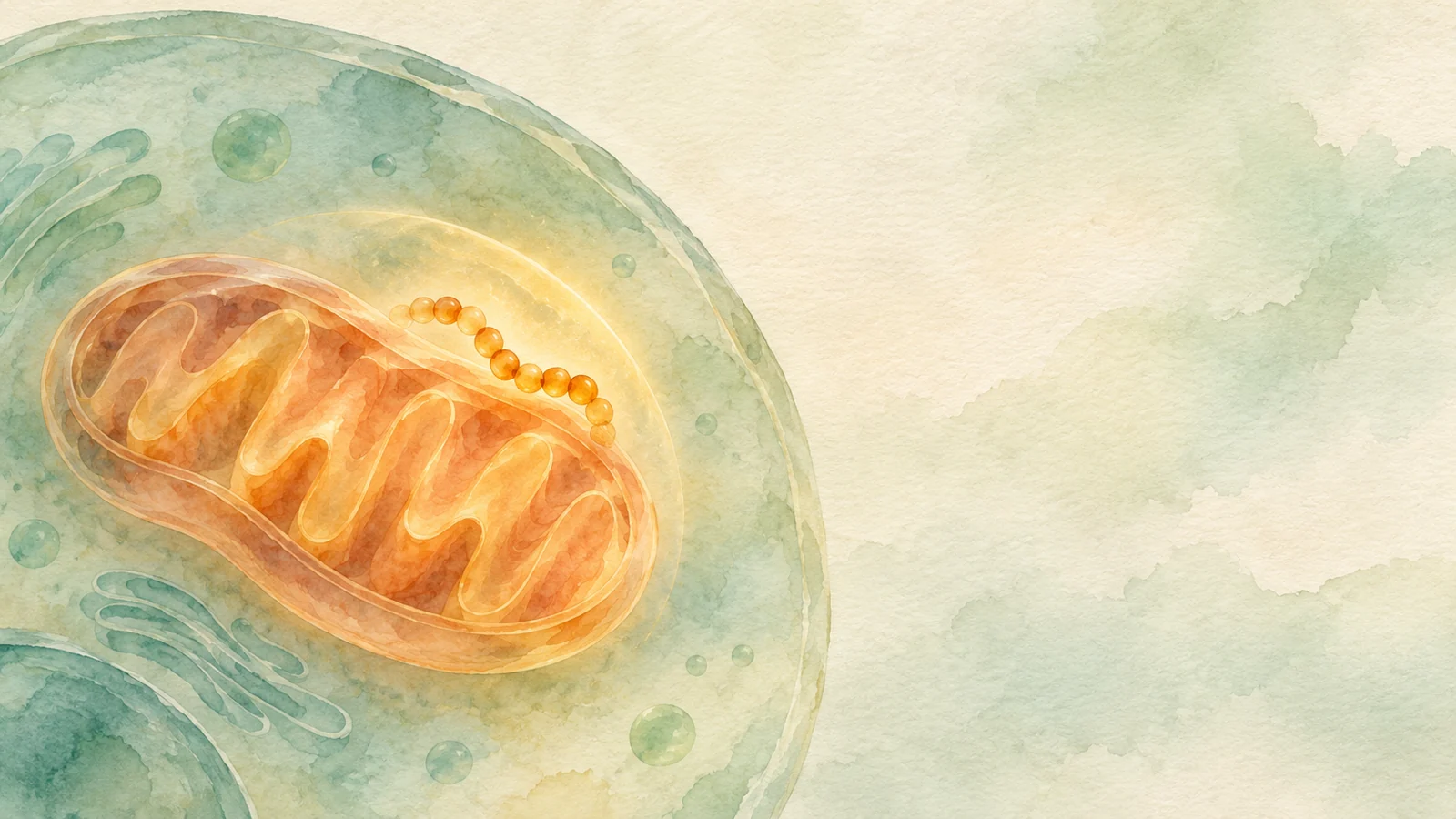
Autophagy is a cellular recycling process. Cells package some material for breakdown and reuse, including damaged components. The humanin autophagy study (https://pubmed.ncbi.nlm.nih.gov/34624450/) investigated cells, animals, and associated biological observations. It offered another possible way to understand the relationship between mitochondrial signals and maintenance processes.
More recycling activity on a laboratory readout is not the same as a proven rejuvenation effect in a person. A useful clinical claim would have to connect the molecular change to something meaningful, such as better function or a reduced risk of disease. Researchers also need to show that changing the process in the proposed way does not create another problem.
For readers, technical terms become less intimidating when tied to a concrete question. Did the researchers measure recycling inside a cell, movement in an animal, or memory in a person? Those observations sit at different points in the path from mechanism to treatment. Keeping them separate is more useful than memorizing every signaling abbreviation.
What do we know about humanin side effects?
The studies reviewed here do not establish a dependable side-effect rate for administering humanin to people. They also do not define an effective injection schedule or demonstrate long-term safety. Describing humanin as naturally occurring cannot resolve those gaps. A substance's normal role and the consequences of supplying extra amounts are separate matters.
Cell-survival effects make context particularly important. Helping a useful cell survive is a different goal from helping an unwanted cell survive. This is a research concern, not proof that a specific harm will occur in a user. People receiving cancer treatment or taking medicines affecting blood sugar should not use a mechanistic benefits list as reassurance about an untested combination.
The identity and condition of a product also matter. A laboratory certificate may address selected chemical characteristics without establishing sterility or clinical suitability. A research-use label is not treatment approval. This article offers no self-injection instructions because the underlying treatment evidence does not validate them.
Can a humanin blood test guide treatment?
Before a measurement becomes useful in practice, researchers need to establish what it means, how reliably it is measured, and what action improves outcomes. A test can be scientifically interesting without answering those questions. A low or high number does not automatically diagnose a deficiency or show that supplementation will help.
Consider a hypothetical reader with a result below a laboratory's comparison range. The next question is not simply how to increase it. The questions are whether the assay is clinically validated, whether the difference matters, and whether changing the number benefits that reader. Those steps protect against treating an interesting marker as a disease.
The same reasoning applies to claims about mitochondrial optimization. A useful outcome needs a definition and a way to measure it. Feeling more energetic, performing better on a physical test, and changing a blood marker may overlap, but one cannot silently substitute for another. Humanin remains an active biological research topic rather than an established general wellness intervention.
About the author and this site's history
Bob Vaughan aka Healthy Mango has studied alternative medicine for around 30 years. His background includes homeopathy certification obtained in India, yoga certification, and Faster EFT certification. He has also studied Arthur Janov's Primal Therapy and personally received it at the Janov center in Los Angeles. Alternative & Complementary Medicine has published online since January 2005. This article links the original research and keeps animal findings separate from human treatment claims. More information is available about the site, and readers can send corrections.
AI assistance was used to organize the research and prepare this article draft.