Electroacupuncture reduced knee osteoarthritis symptoms more than a simulated treatment in a 2026 trial of 480 people. After six weeks, participants who received real treatment reported larger improvements in pain, stiffness, and everyday function. The difference was still present at the last assessment, 30 weeks after the study began. The trial offers a useful reason to consider electroacupuncture for symptom relief. It does not show that the treatment rebuilds cartilage or stops arthritis from progressing.
The 2026 Hang trial (https://pubmed.ncbi.nlm.nih.gov/42232684/) is unusually large for an acupuncture study and used a sham procedure to make the comparison more informative. Its details matter because knee pain often changes over time, and attention from a practitioner can itself help someone feel better.
What electroacupuncture involves
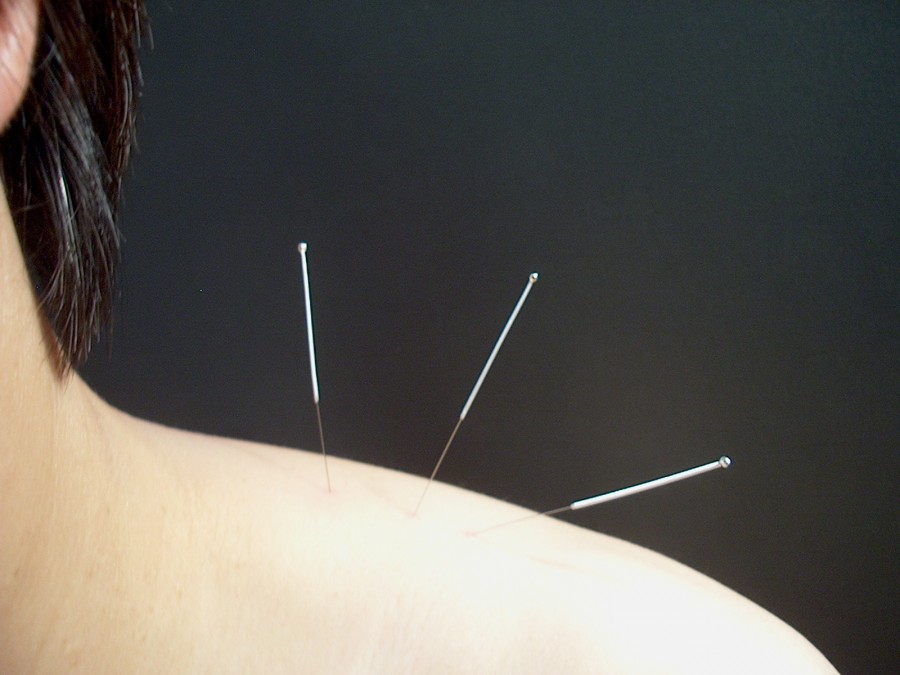
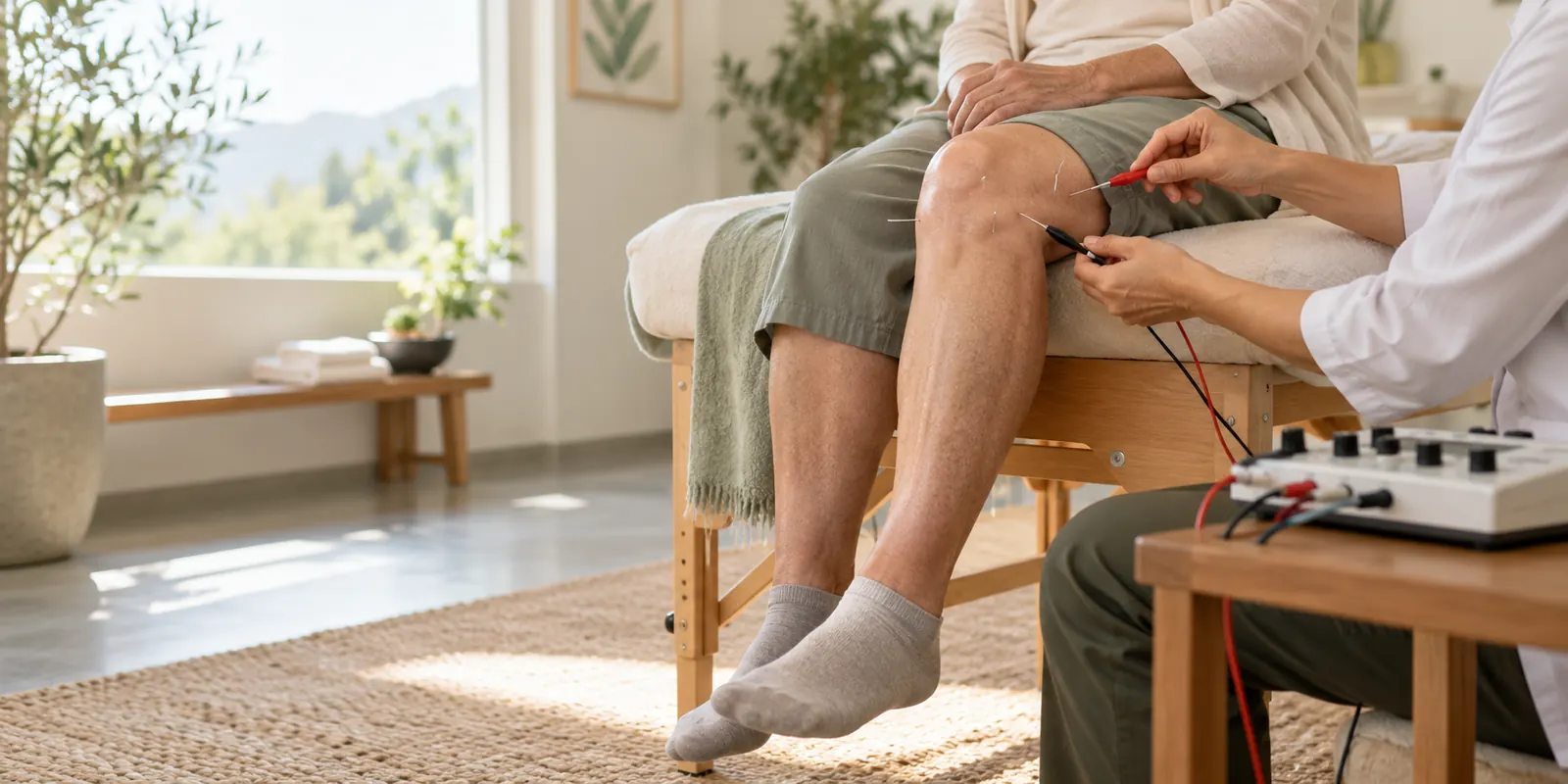
An acupuncturist places fine needles at selected points, then connects some needles to a device that sends a mild electrical pulse. A session is more involved than using a home electrical pad on the skin. The needles, electrical settings, practitioner skill, and number of visits can differ between clinics. Research on one schedule cannot tell us exactly how every version will work.
Knee osteoarthritis affects several joint tissues. Pain may come with stiffness after rest, swelling, and difficulty with stairs or walking. The National Institute of Arthritis and Musculoskeletal and Skin Diseases describes these symptoms and explains that a clinician may need to rule out other causes of joint pain (https://www.niams.nih.gov/health-topics/osteoarthritis). A treatment can ease symptoms without reversing the underlying joint changes.
Healthy Mango has a general introduction to acupuncture for readers new to the practice. The knee trial asks a narrower question: whether a structured course of electroacupuncture helps people with established, painful knee osteoarthritis more than a convincing simulated course.
Who took part, and what did they receive?
Researchers at six hospitals in Shanghai enrolled 480 adults. They were 50 to 75 years old and had imaging evidence of moderate knee osteoarthritis, knee pain for at least six months, and a recent pain rating above four on a ten-point scale but no higher than seven. They also had signs of knee swelling. Those entry rules produced a fairly specific group. A person with a newly injured knee, very severe arthritis, or much milder symptoms may not get the same result.
Random assignment put 240 people in each group. Both groups attended three sessions a week for six weeks, or 18 scheduled sessions. Registered acupuncturists with at least three years of experience delivered the treatments after common training. The real group received needle insertion and electrical stimulation. The comparison group received blunt needles pressed against pads over the same points, without piercing the skin. Practitioners mimicked the usual handling of needles and used a device during the session, so the visit looked and felt more like actual treatment than a simple waiting list would.
The 2026 Hang trial (https://pubmed.ncbi.nlm.nih.gov/42232684/) reports that participant blinding checks found no clear evidence of major unblinding. The acupuncturists necessarily knew which procedure they gave. People in both groups also received substantial attention. Comparing them helps separate the complete treatment from some of the expectations and contact that accompany it, although no sham acupuncture procedure is guaranteed to be biologically inactive.
Researchers permitted a rescue pain medicine during the study, but reported that nobody used it. That simplifies one part of the comparison, while also making this group less typical of some people who manage persistent knee pain with medication. The trial did not pit electroacupuncture against a tailored exercise program, and it does not establish which approach would be more helpful for a particular reader.
How big was the symptom difference?
The main measure was a questionnaire called WOMAC. It combines answers about knee pain, stiffness, and physical function into a total score from zero to 240. Higher scores mean worse symptoms. At week six, the adjusted average score fell by 65.35 points in the electroacupuncture group and by 24.76 points in the sham group. The adjusted difference between groups was 40.56 points. The study's statistical range for that difference was 36.35 to 44.77 points, so the result was unlikely to be a chance finding within this study. Those are changes in reported symptoms, not measurements of repaired joint tissue.
The 2026 Hang trial (https://pubmed.ncbi.nlm.nih.gov/42232684/) also counted people who improved by at least 12 percent on the total WOMAC score, a threshold chosen before results were analyzed. By week six, 223 of 240 people receiving electroacupuncture met it, compared with 163 of 240 receiving sham treatment. That is about 93 percent versus 68 percent. A responder threshold makes the result easier to picture, but a 12 percent improvement is not the same as being pain free. Someone can meet that definition and still have troublesome knee symptoms.
Other measures pointed in the same direction. Pain, stiffness, and function parts of the WOMAC questionnaire favored real electroacupuncture. Participants also rated pain on a separate scale, and researchers measured how far they walked in six minutes. The real group improved more on the walking test, a useful check beyond questionnaires. The reported between-group difference in change was about 42 meters. The paper describes the standardized effect on that walking measure as modest, so the strong questionnaire results should not be translated into a dramatic mobility gain for everyone.
Most participants remained in the study: 477 of 480 completed the week-30 assessment. The symptom difference persisted through that point. Follow-up after a six-week treatment course is valuable because a benefit that disappears immediately would be less useful. Thirty weeks still cannot tell us what happens after a year or two, whether repeat courses help, or whether an individual patient can maintain improvement without other changes.
Did the MRI scans show cartilage repair?
The researchers also used knee MRI to look for changes in cartilage and tissue associated with inflammation. Some measurements favored electroacupuncture after six weeks. The trial authors called these results exploratory. The study was designed primarily to test symptoms, and six weeks is a short interval for a confident claim about long-term joint structure.
The 2026 Hang trial (https://pubmed.ncbi.nlm.nih.gov/42232684/) describes the MRI signals as a reason for further research. They cannot establish that electroacupuncture regrows cartilage, prevents knee replacement, or changes the long-term course of osteoarthritis. Some planned secondary measurements, including gait analysis and muscle strength, were too incomplete to support formal comparisons. The authors attribute those gaps partly to the burden of testing across six sites and disruptions during the pandemic.
A published correction to the trial (https://pubmed.ncbi.nlm.nih.gov/42699771/) also needs editorial review before publication. The main week-six symptom result was a separate outcome, and the structural results remain exploratory.
How does this fit with earlier trials?
An earlier intensive-acupuncture trial (https://pubmed.ncbi.nlm.nih.gov/33174383/) also randomized 480 people with knee osteoarthritis, this time among electroacupuncture, manual acupuncture, and sham acupuncture. Treatment took place three times a week for eight weeks. Of the 480 randomized participants, 442 were included in its main efficacy analysis. At week eight, 60.3 percent of the electroacupuncture group met that study's combined pain-and-function response definition, versus 47.3 percent of the sham group. This supports a symptom benefit, although its responder rule was different from the 2026 trial's rule. The percentages should not be compared as if they measured the same outcome.
Results have not been uniformly positive. A small 2020 pilot trial (https://pubmed.ncbi.nlm.nih.gov/32802114/) assigned 30 people to electroacupuncture or sham treatment for eight weeks. It found no clear difference on its main timed walking task. A 2021 trial of superficial needling (https://pubmed.ncbi.nlm.nih.gov/34126097/) found a large drop in pain in both the real and sham groups, with no clear difference between them after four weeks. Superficial needling is a different intervention from electroacupuncture, but the result shows why the sham comparison matters. Knee pain can improve after a treatment encounter even when the tested needling method adds little detectable benefit.
The newer large trial adds weight to the case for electroacupuncture as a symptom option. Differences in needling, electrical stimulation, visit frequency, who enters a study, and the sham method make one exact effect size hard to apply to every clinic. The promising 2026 result warrants replication in other settings, including comparisons with other practical ways people manage knee osteoarthritis.
What should a reader consider before booking?
The schedule in the 2026 study was demanding: three visits a week for six weeks. A clinic offering one session every few weeks is providing a different amount of treatment. Ask what type of acupuncture is offered, whether electrical stimulation is used, how many sessions are proposed, what the total cost will be, and what change you would use to decide whether it is helping. For instance, you might track pain when climbing stairs or the length of a comfortable walk, rather than relying on a general impression after one appointment.
The 2026 Hang trial (https://pubmed.ncbi.nlm.nih.gov/42232684/) recorded mild adverse events in 12 of 240 people receiving electroacupuncture and three of 240 receiving sham treatment. Seven events in the real-treatment group were considered treatment related: four small bruises beneath the skin and three reports of numbness. No serious event occurred in either group. A trial of 480 people cannot rule out rare harm.
The National Center for Complementary and Integrative Health says acupuncture is generally safe when a qualified practitioner uses sterile, single-use needles, but poor technique or nonsterile equipment can cause serious complications (https://www.nccih.nih.gov/health/acupuncture-effectiveness-and-safety). A hospital's patient guidance on acupuncture asks people to disclose pacemakers and other implants, blood-thinning medicines, possible pregnancy, and changes in their general health. Tell the practitioner about these before an electrical treatment. Seek prompt medical advice for a knee that becomes hot and swollen, follows a significant injury, or is paired with fever, as the NHS knee pain guidance advises. Those symptoms need an explanation before a routine acupuncture course.
Electroacupuncture may be a reasonable complementary option for someone with a confirmed knee osteoarthritis diagnosis who can manage the visit schedule and cost. The most defensible expectation is possible improvement in pain and daily function over several weeks. The evidence does not justify promising cartilage repair or replacing an evaluation for a new or worsening knee problem.
END ARTICLE BODY